Kitchen
Instinct meets method.
Christos works by instinct: taste it, adjust it, taste it again, until it's right.
Themis works by method: measured cultures, controlled temperatures, a ferment left running exactly as long as the science says it needs. One's a cook, the other a food scientist; between them, the kitchen and the lab stop being two separate rooms.
Themis doesn't stop at the jars, either. Enough years spent studying flavor at that level and you learn how to host it, too — she's often the one curating the room out front, the same instinct that shapes a miso now shaping how a table is looked after.
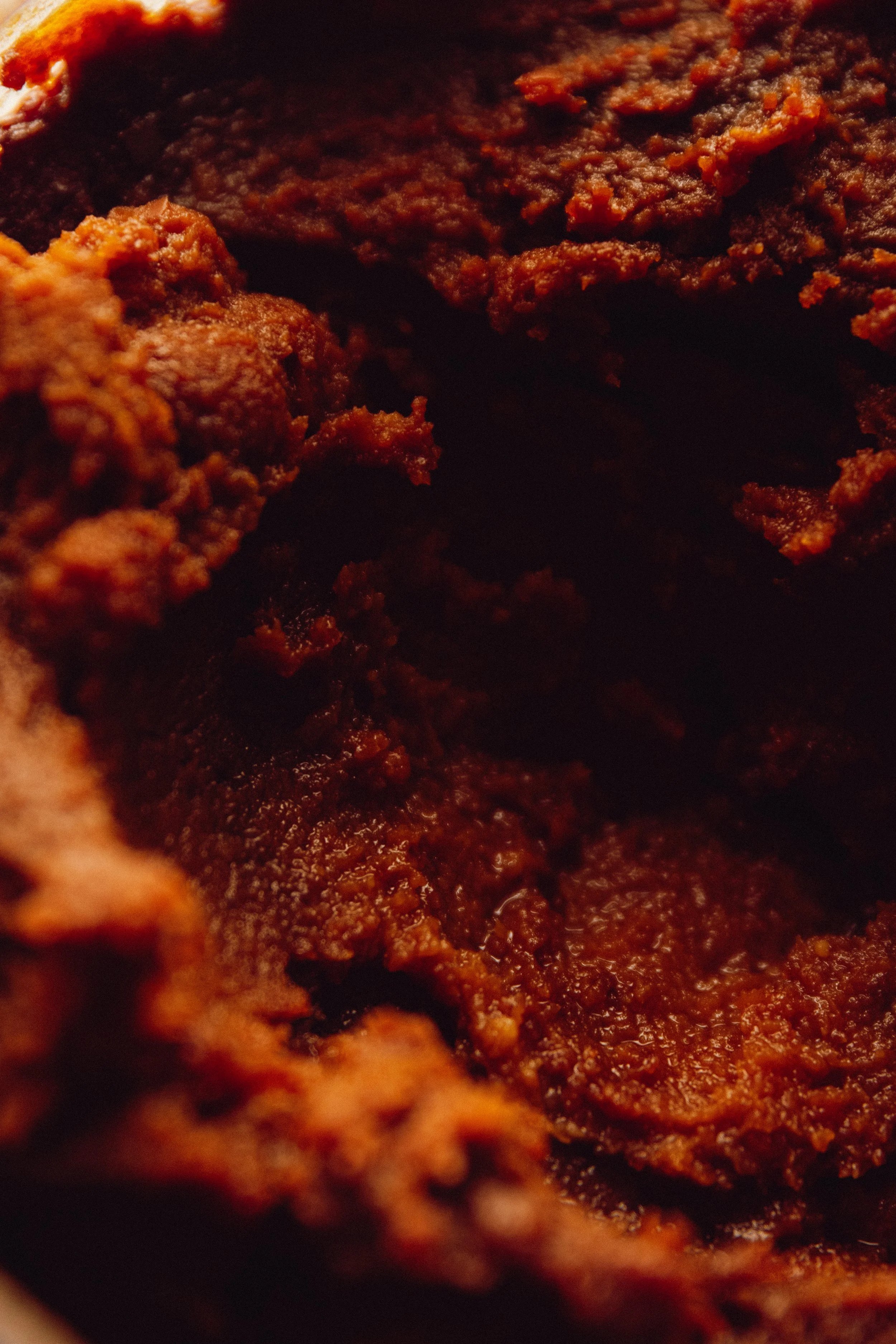
Our starting point is Greek. Our method borrows from Japan, Korea, and everywhere fermentation is treated as craft rather than shortcut.
At the center is garos, the fermented sauce ancient Greece, Rome and Byzantium seasoned everything with, long before "umami" had a name. We put it back to work, alongside koji, miso, shoyu and kimchi-style pickles, until a Greek ingredient starts to taste like something new.
The Philosophy.
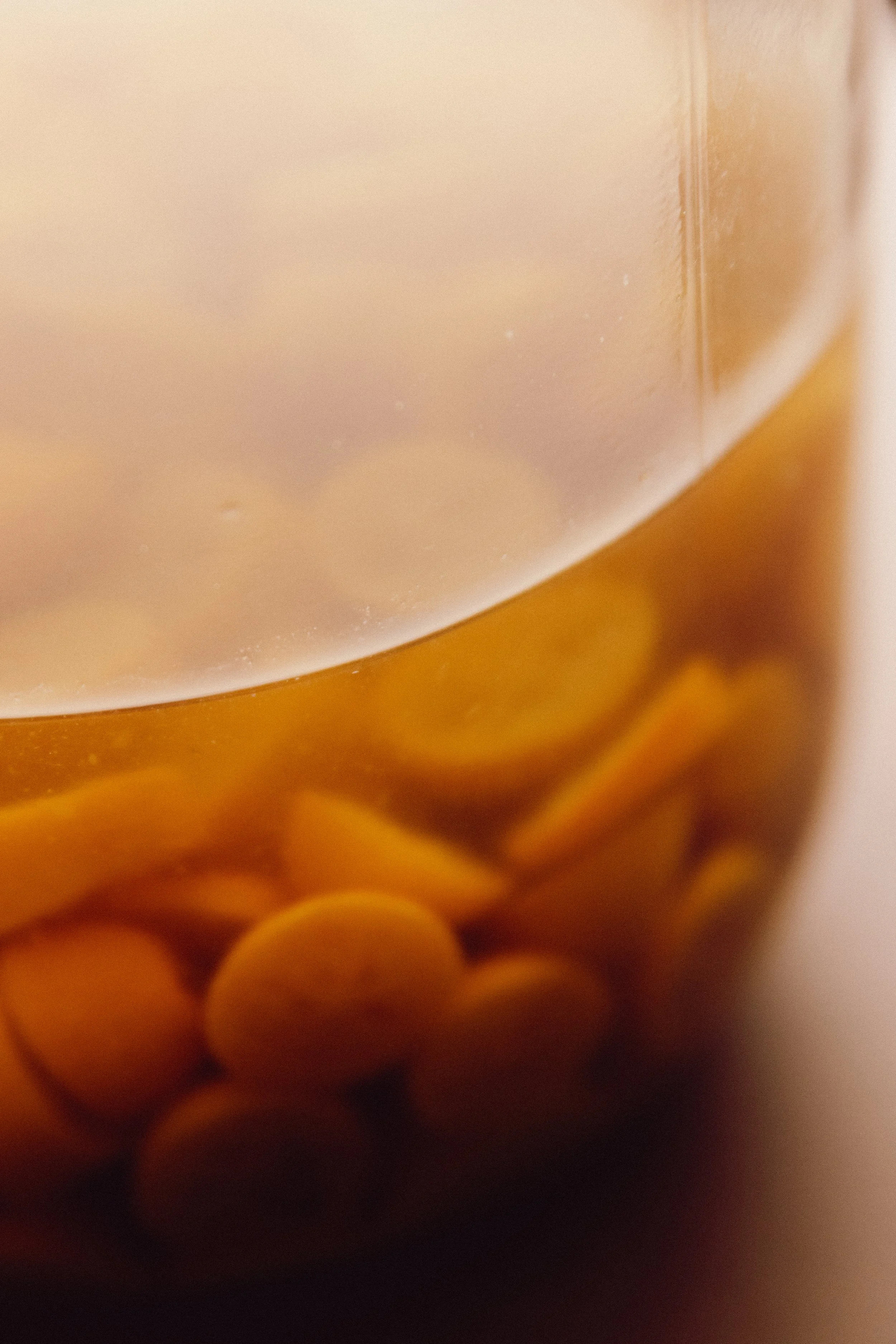
Nothing on the pass is rushed. A vegetable might sit fermenting for three weeks before it's ready. A sauce might take four months. We're not doing this for effect: fermentation is simply what turns a good ingredient into something with depth, edge, and a finish that stays with you.
The menu follows the seasons rather than a fixed script. It's rebuilt twice a year and adjusted constantly in between, because the ingredients that arrive in spring have nothing to say in winter.
Behind it all is a partnership: a chef who thinks in flavor, and a food scientist who thinks in fermentation science. Garum's kitchen is where those two languages meet.